
Meet with Dr Jonathan Haverkampf for private psychotherapy and counselling in Dublin 2, or by Zoom where suitable. This service is for adults.
If you are looking for help with anxiety or panic attacks, OCD, trauma, or depression, these pages explain my approach and what a first appointment may involve. You can also read about online therapy in Ireland if travelling to Dublin is difficult.
Prefer to talk first? You can call or text Dr Haverkampf on +353 87 1733187. If a call is not answered, a brief voicemail or text with your name and a good time to ring back is welcome.
This number is for appointment and practical enquiries — it is not a crisis line. If you need urgent help, please contact your GP, call 999 or 112, or contact the Samaritans free on 116 123.
Therapy, Counselling and Psychotherapy in Dublin
In a first appointment, we can talk about what has brought you here, what you would like help with, and whether my way of working feels suitable. You do not need to arrive with a diagnosis or a prepared account of everything that has happened. You can read about my approach and experience, check the practical arrangements and fees, or choose an appointment time. If you would rather ask about arrangements first, you are welcome to get in touch.
This page is the central Dublin route for private psychotherapy and counselling with Dr Jonathan Haverkampf in Dublin 2 and online where clinically suitable. If your main concern is more specific, you can also go directly to the pages on anxiety therapy in Dublin, OCD therapy with CBT and ERP in Dublin, depression therapy in Dublin, trauma therapy in Dublin, couples counselling, online therapy in Ireland, or online counselling in Ireland.
- To understand the process first, see what psychotherapy is and how it works.
- If you are comparing in-person and remote options, see therapist near me or online therapy.
- For practical next steps, use make an appointment, fees, or contact.
FAQ: Dublin Therapy and Counselling
What is the difference between a therapist, psychotherapist and counsellor in Dublin?
In everyday search, people often use therapist, counsellor and psychotherapist to mean a trained professional who helps with emotional, relational or mental-health difficulties. The exact title, training route and regulatory position can differ, so it is sensible to look at the person’s qualifications, approach, experience, boundaries, fees and whether the way of working fits your needs.
Can I choose online therapy if I am not near Dublin?
Online therapy may be suitable when travel, work, mobility, childcare or privacy needs make video sessions a better fit. It is not right for every situation, especially where there is immediate risk, severe instability, local safeguarding concerns, or a need for local crisis care.
Do you offer anxiety, depression, trauma or couples counselling in Dublin?
The site has separate information routes for anxiety therapy, depression therapy, trauma therapy and couples counselling in Dublin and online. The best starting point is to read the relevant service page, then use the appointment, fees or contact pages for practical next steps.
Sources and review. Published or updated in May 2026. This page is educational, not a diagnosis or personal medical advice. Clinical statements are supported by guideline, public-health, peer-reviewed, or professional sources. Jonathan’s related publications are included as background and authorship routes, not as the sole evidence for clinical claims.
- NICE CG113: generalised anxiety disorder and panic disorder in adults
- NICE CG159: social anxiety disorder
- Hofmann and Smits, CBT for adult anxiety disorders meta-analysis
- Jonathan Haverkampf research and publications hub
- Google Scholar profile: Christian Jonathan Haverkampf
- CFT for Anxiety and Panic Attacks
- CBT and Psychodynamic Psychotherapy – A Comparison
Psychotherapy, Counselling and Talk Therapy: Start Here
People use words such as psychotherapy, counselling, therapy, talk therapy, therapist, psychotherapist, psychologist and psychiatrist in different ways. A useful first step is to separate general information from the practical question of what kind of support may fit your situation.
Understand the terms
Find a practical route
This site is educational and cannot decide what support is right for you. For source and review boundaries, see how this mental health information is written and reviewed and the disclaimer.
Therapy and counselling in Dublin and online
When you need a place to talk
People rarely come to therapy with a neat story. Sometimes there is anxiety, OCD, depression, grief, trauma, panic, work stress, or a relationship that has become painful. Sometimes the only honest sentence is: I am not myself, and I do not want to keep carrying this alone. If that is where you are, we can begin with the pieces you have, not a polished explanation.
Online therapy route
For people who are not coming to Dublin in person, online therapy by Zoom is a main service route when it is clinically suitable, private, and safe enough.
Online service pages
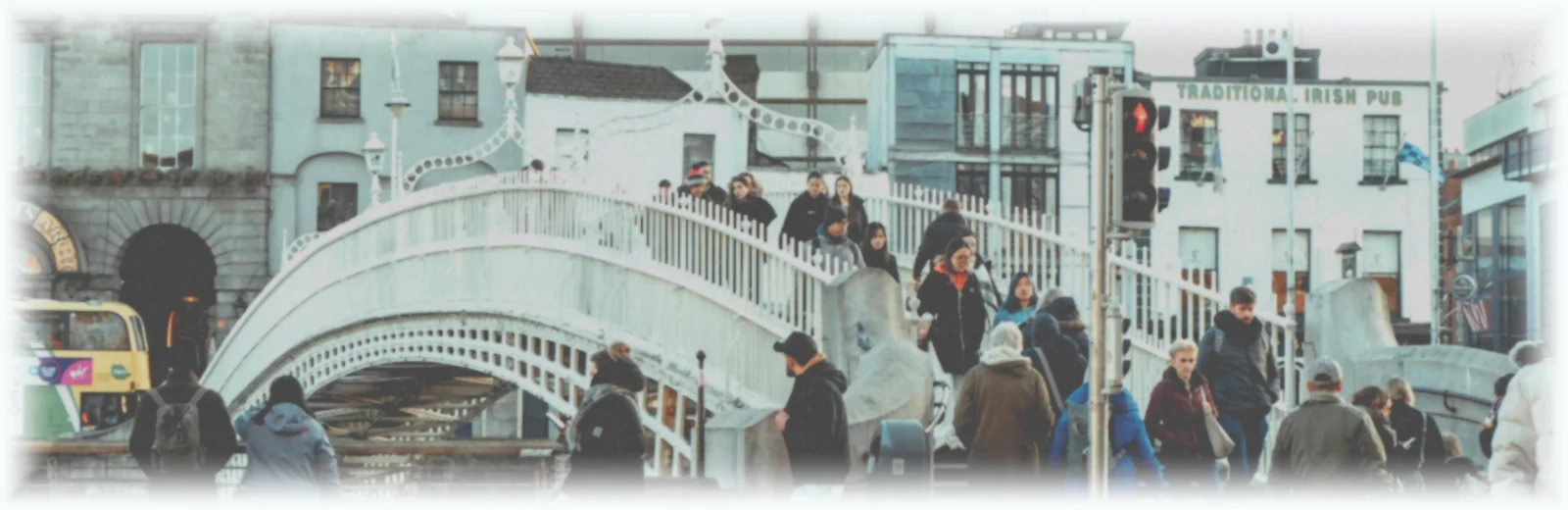
A steady conversation, in person or online
I see adults in Dublin 2 and, where it fits, by Zoom. Some people value sitting in a room away from home and work. Others are elsewhere in Ireland or abroad and need to think through whether online therapy is a sensible option. We can talk about that openly before you commit to ongoing sessions.
The rest of the website offers general mental-health information. This page is more personal: what it may be like to work together, what people often bring, and how to take a first step if it may be time to talk to someone.
For a wider country-level overview, see the psychotherapy and counselling in Ireland page, which gathers Ireland, Dublin, online, appointment, fees, contact, and service-route information in one place.
My work draws mainly on psychodynamic psychotherapy and CBT, with integrative and communication-focused ideas also shaping the conversation. We may look at symptoms, but also at patterns: how you relate, what you avoid, how you speak to yourself, where anxiety or sadness tends to gather, and what has become harder than it needs to be.
Therapy is not a crisis service, and this page cannot give a diagnosis or personal medical advice. If there may be immediate danger, or you feel unable to keep yourself safe, please contact local emergency services or crisis support now.
How therapy may help
Therapy is a regular private conversation where there is room for things that are hard to say quickly. Anxiety loops, low mood, self-criticism, grief, trauma responses, stress, burnout, and relationship patterns often make more sense when they can be looked at slowly and without judgement. The aim is not to force a neat answer, but to understand what is happening and find a little more room to respond.
Some people arrive with a clear name for the problem. Others arrive with a knot of things that is harder to describe. Both are valid places to begin.
Where medication, diagnosis, medical tests, or prescription changes are involved, those questions need to be discussed with a qualified prescriber. Psychotherapy and counselling can sit alongside medical care where that is appropriate, but they do not replace urgent care, crisis support, or a medical assessment.
Looking for counselling near you?
If you have typed counselling near me into a search box, you may already be trying to turn a difficult feeling into a practical next step. The real questions are often simple: can I meet this person, could online work be an option, and does the way they work feel right for me?
- If you live or work in Dublin city centre or the south side, in-person psychotherapy and counselling is available on Dame Street in Dublin 2, on the south side of the river Liffey. The practice is within walking distance of Trinity College, Temple Bar, Dublin Castle, Grafton Street, and South Great George’s Street, and is usually straightforward to reach by Luas, DART, bus, taxi, or on foot from much of the city. People also travel in from Ranelagh, Rathmines, Donnybrook, Sandymount, Ringsend, Dundrum, Stillorgan, Blackrock, Dún Laoghaire, and nearby areas. The dedicated counselling in South Dublin page gives more detail.
- If you are further out, in another part of Ireland, or abroad, online counselling and psychotherapy by Zoom may be possible where it is clinically suitable. It can help when travel is difficult, privacy at home is realistic, and the kind of support needed does not require meeting in person. Suitability is talked through before any commitment is made.
- If you are looking for couples counselling, sessions with both partners present are available in person in Dublin and online by Zoom. See the counselling for couples page.
- If you are not sure whether you are looking for counselling, psychotherapy, coaching, or a medical assessment, you are welcome to ask a brief practical question through the contact page first. If a different service would suit you better, that will be said honestly.
A short note on words: “counselling” and “psychotherapy” are often used interchangeably. Here they both refer to a confidential conversation with a qualified mental-health professional. “Counselling psychology” is a related but separate profession in Ireland — Dr Jonathan Haverkampf is a psychotherapist and counsellor with a medical background (he practised as a doctor until 2021), not a counselling psychologist.
Common reasons people look for therapy
These are only starting points. You may recognise one concern, several, or none of them exactly. You do not have to fit yourself neatly into a category before therapy can begin.
Anxiety, worry and panic
For persistent worry, panic attacks, avoidance, physical anxiety symptoms, or feeling constantly on alert.
OCD and intrusive thoughts
For intrusive thoughts, checking, reassurance seeking, compulsions, or distressing loops that are hard to step out of.
Depression and low mood
For low mood, loss of energy, withdrawal, self-criticism, loss of interest, or feeling stuck.
Stress, burnout and exhaustion
For ongoing pressure, work stress, emotional exhaustion, difficulty switching off, or feeling unable to recover.
Trauma and PTSD
For the effects of frightening, overwhelming, or repeated experiences, including anxiety, numbness, memories, or relationship patterns.
Panic attacks
For sudden surges of fear, body sensations, fear of another attack, or avoiding places because of panic.
Social anxiety
For fear of being judged, avoidance of social or work situations, and the pressure to hide anxiety from others.
Grief and loss
For bereavement, major life changes, complicated feelings after loss, or trying to find a way forward without rushing grief.
Relationships and communication
For conflict, distance, fear of closeness, repeated relationship patterns, boundaries, and communication difficulties.
Counselling for couples
For partners wanting to look together at communication, conflict, trust, closeness, life decisions, or difficult patterns.
Counselling in South Dublin
For people in South Dublin looking for in-person counselling close to the city centre, with online sessions also available.
If no route feels quite right, that is fine. A first appointment can help clarify what has been difficult and whether therapy in Dublin or online might be suitable. You can also make contact with a practical question before booking, or check fees and payment information.
Psychotherapy and counselling in Dublin
When someone searches for therapy in Dublin or counselling in Dublin, the questions are often ordinary but important: Where would we meet? What happens first? Would I feel able to speak openly with this person? In-person work can offer a steady setting away from home, work, and the noise of daily life.
People come to therapy for many reasons: anxiety, OCD, depression, grief, trauma, stress, relationship difficulties, low confidence, self-understanding, or one of those in-between periods when life is still functioning on the outside but no longer feels right inside. You do not need perfect words for the problem before making contact.
If you would like a more general introduction first, the guide what is psychotherapy? explains how psychotherapy works, what usually happens in sessions, and how psychotherapy is different from counselling, psychology, and psychiatry.
Online therapy by Zoom
Online psychotherapy and online counselling can make therapy possible when travel is difficult, when you live outside Dublin, or when a more flexible format is needed. For some people it is the most realistic way to meet regularly. For others, in-person work is the better option. The fit matters.
Online sessions work best when you have privacy, a steady connection, and a realistic plan for local urgent support if it is ever needed. If you live outside Ireland, suitability may also depend on local regulations, time zone, emergency arrangements, and the nature of what you want to work on.
What the first appointment is for
- To say, in your own words, what has been happening
- To talk about symptoms, stresses, relationships, work, background, and support around you, as far as it feels relevant
- To think together about goals, questions, and what would make therapy useful
- To consider whether in-person or online work is the better fit
- To talk about next steps without pressure, and without any promise of a fixed outcome
Location in Dublin, Ireland
The in-person practice is at 29-30 Dame Street, Dublin 2 (D02 A025), in the city centre on the south side of the river Liffey. Most people in Ireland would describe this as South Dublin, although in formal administrative terms South Dublin County (Tallaght, Lucan, Clondalkin) is a separate local-government area. The practice is in the city, not in that county. The map below is included for orientation.
The location is usually practical for people coming from several parts of Dublin and beyond:
- On foot from much of Dublin 2, 4, 6, and 8, including Trinity College, Stephen’s Green, Temple Bar, Christ Church, Camden Street, and South Great George’s Street.
- By Luas Green Line (stops including St Stephen’s Green, Westmoreland, and Trinity), and the Luas Red Line (stops including Jervis and Abbey Street, with a short walk across the river).
- By DART (Pearse, Tara Street, and Connolly stations are within walking distance), useful for people coming from Dún Laoghaire, Blackrock, Sandymount, Howth, and the coastal line.
- By Dublin Bus, with many routes serving the city centre.
- By car or taxi: public car parks are available in the surrounding streets, and on-street parking near the practice itself is limited, so public transport is usually easier.
People come to the Dublin practice from Dublin 2, 4, 6, 6W, 8 and 14, including Ranelagh, Rathmines, Rathgar, Donnybrook, Sandymount, Ringsend, Terenure, Templeogue, Dundrum, Goatstown, Stillorgan, Mount Merrion, Dún Laoghaire, Blackrock, Monkstown, Booterstown, Glenageary and Dalkey. Some people also travel from Bray, Greystones, north or west Dublin, or further out in Ireland for occasional in-person sessions.
For people who cannot easily travel to Dublin, online counselling and psychotherapy by Zoom is available where it is clinically suitable — see the online section above.
Dublin and Ireland information
For people travelling to an in-person appointment, or simply orienting themselves in Dublin, these general city links may be useful. They are practical location links, not mental-health advice.
Online counselling, therapy and psychotherapy in Ireland
For people who are not looking mainly for an in-person Dublin appointment, the new online counselling in Ireland page explains Zoom appointments, privacy, technology, local emergency support, online therapy, online psychotherapy, online CBT-informed work, and when online work may not be suitable.
Practical next steps
Make an appointment
Use the appointment page or direct scheduler if you feel ready to book a first consultation.
Fees
Check current session fees, reduced-fee information, and the practical notes before booking.
Contact
Use the contact page for brief practical questions.
Find Help
If you are not sure what kind of support you need, start with a broader guide to help options and urgent support routes.
Frequently asked questions
Do you offer in-person therapy in Dublin?
Yes. Therapy appointments may be available in person in Dublin city centre, Ireland, depending on availability and suitability.
Do you offer online psychotherapy or counselling by Zoom?
Yes. Online sessions by Zoom may be possible where clinically and practically appropriate, including for people outside Dublin.
Can I book if I live outside Ireland?
Online work may be possible for some people outside Ireland, but it depends on clinical need, privacy, time zone, local emergency support, and any practical or legal considerations.
What happens in a first appointment?
The first appointment is usually a chance to talk through what has brought you here, what has been difficult, what you hope might change, and whether this kind of support feels worth continuing.
Is this the right route for urgent crisis help?
No. If there is immediate danger, or someone may be unable to stay safe, please use local emergency services or crisis support rather than waiting for an appointment reply.
Books and further reading
For structured reading and practical exercises, see books by Dr Jonathan Haverkampf, including Getting Rid of Anxiety.
Communication in psychotherapy and counselling
Therapy often involves noticing how feelings, words, silence, assumptions, and relationship patterns fit together. A curated article hub is available if you want to explore this side of psychotherapy in more depth.
Two more specific routes may help some visitors orient themselves: trauma therapy and counselling in Dublin and online and false memory OCD and real event OCD. Both pages are educational and keep clear boundaries around diagnosis, emergency care, and personal risk assessment.
Central Dublin access and online options
The practice is on Dame Street in Dublin 2, right on the edge of Temple Bar and close to the city-centre transport network. People coming from Terenure, Tallaght, Rathmines, Ranelagh, Rathgar, the south city, the north city or wider Dublin can often reach the centre more easily than a suburb-specific location. Online video appointments may also be suitable when travel, work, childcare or privacy at home make that a better fit.
For more information about video sessions, see Online Therapy Ireland.
Support Options Beyond Private Therapy
Some readers want private psychotherapy in Dublin or online; others first need public, charity, lower-cost or urgent support. These routes help with that choice.